

The First Airplane Takes Flight
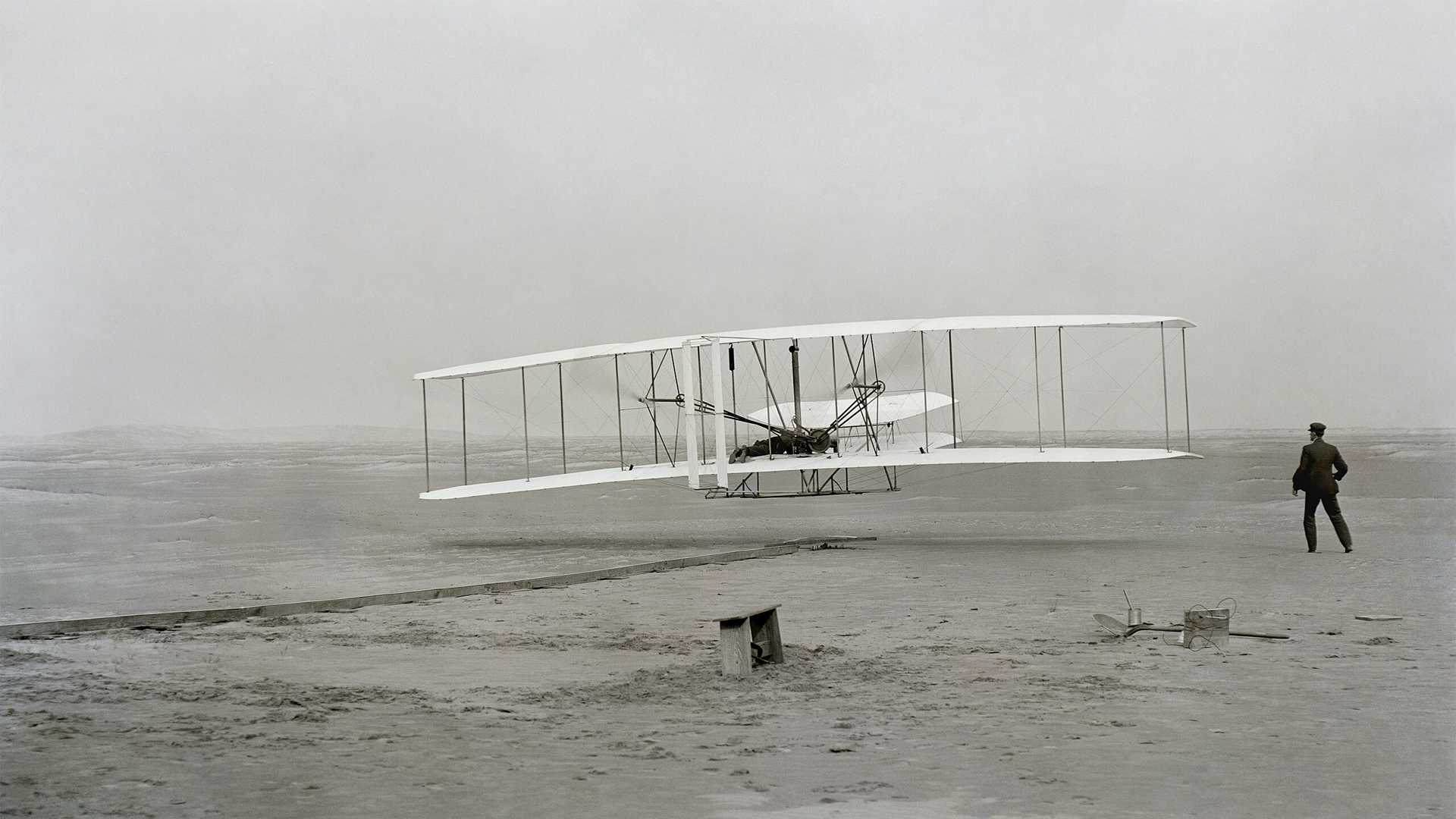
The Wright brothers’ first powered airplane lifts off the ground at Kitty Hawk, North Carolina, marking the birth of human flight.
What Happened?
On a cold and windy morning near Kitty Hawk, North Carolina, two brothers changed the course of human history. Orville and Wilbur Wright launched a strange-looking flying machine made of wood, fabric, and wire, powered by a small gasoline engine. At 10:35 a.m., Orville climbed aboard, and the aircraft lifted off the ground for 12 seconds, traveling 120 feet through the air. For the first time, a powered airplane had flown under human control.
The Wright brothers weren't famous scientists or wealthy inventors. They grew up in Dayton, Ohio, and made their living running a bicycle shop. What set them apart was how they approached problems. Instead of guessing or copying others, they studied previous experiments, tested ideas carefully, and learned from every failure. They believed flight wasn't just about power, but about balance and control.
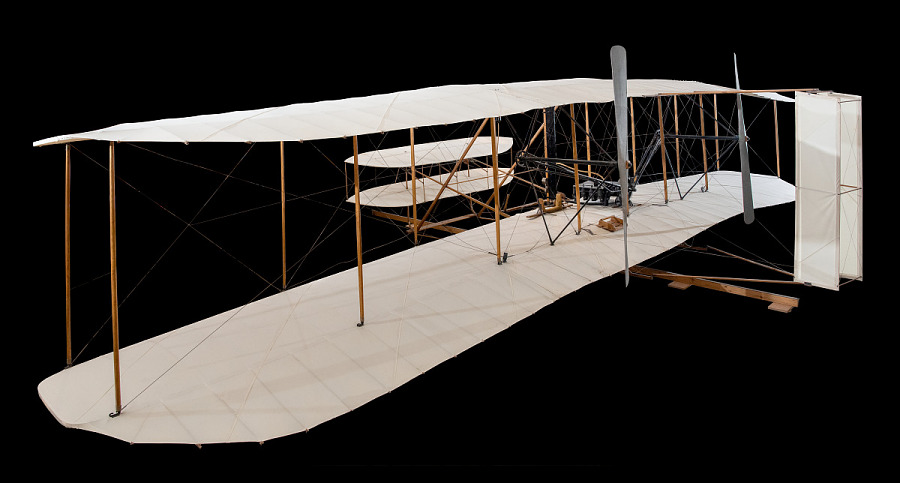
Before attempting powered flight, the brothers spent years flying gliders. They chose Kitty Hawk because of its steady winds and soft sand, which made crashes less dangerous. Through trial and error, they solved one of the hardest problems of flight: how to steer an airplane in the air. Their system of wing-warping allowed pilots to control an aircraft in three dimensions, something no one had mastered before.
To prepare for their final test, the Wrights even built their own wind tunnel to study how air moved over wings. This allowed them to design better shapes and improve lift. When no suitable engine existed, they designed and built one themselves with the help of their mechanic, Charles Taylor. Every part of their airplane was the result of careful thinking and testing.
On December 17, the brothers made four flights, each longer than the last. Wilbur’s final flight covered 852 feet and lasted 59 seconds, proving that the first success was no accident. Although the plane was damaged later that day by strong winds, the goal had already been reached. Humans could now fly using machines they controlled.
The Wright brothers’ did more than get an airplane off the ground. They showed that progress comes from patience, creativity, and learning from failure. Their work laid the foundation for modern aviation, making it possible for people to travel across countries, oceans, and eventually even into space.
Why It Matters
From that short flight at Kitty Hawk grew the airplanes, helicopters, and spacecraft we rely on today. What began as a fragile machine on a sandy beach became one of the most important technological breakthroughs in human history. The Wright brothers’ first flight proved that careful experimentation and problem-solving could turn an impossible dream into reality. Their success opened the door to global travel, exploration, and connection, reshaping how humans move, communicate, and understand the world.
?
Why do you think the Wright brothers focused so much on control instead of just engine power?
How did failing with early gliders help the Wright brothers succeed later?
What modern technologies exist today because humans learned how to fly?
Why is learning from mistakes important in science and engineering?
How might the world be different if airplanes had never been invented?
Dig Deeper
A historical look at the Wright brothers’ first successful flight and the aircraft that made it possible.
An engaging explanation of how the Wright brothers’ invention transformed transportation and the modern world.
Related

Aerodynamics and the Forces of Flight
Weight, lift, thrust, and drag—these are the invisible forces every pilot and engineer must master to conquer the sky. From paper airplanes to rocket launches, aerodynamics is the science behind every flight.
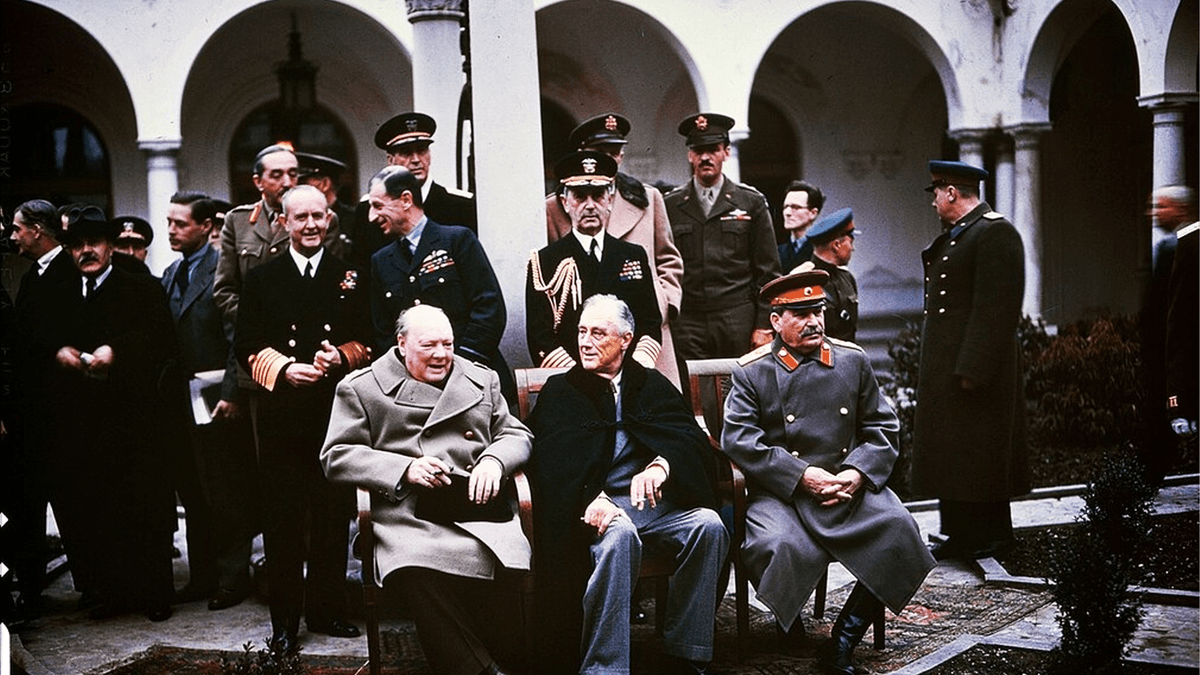
The Cold War & Fear at Home: Ideology, Power, and Public Anxiety
A global rivalry shaped by fear, ideology, and the constant tension between freedom and security.
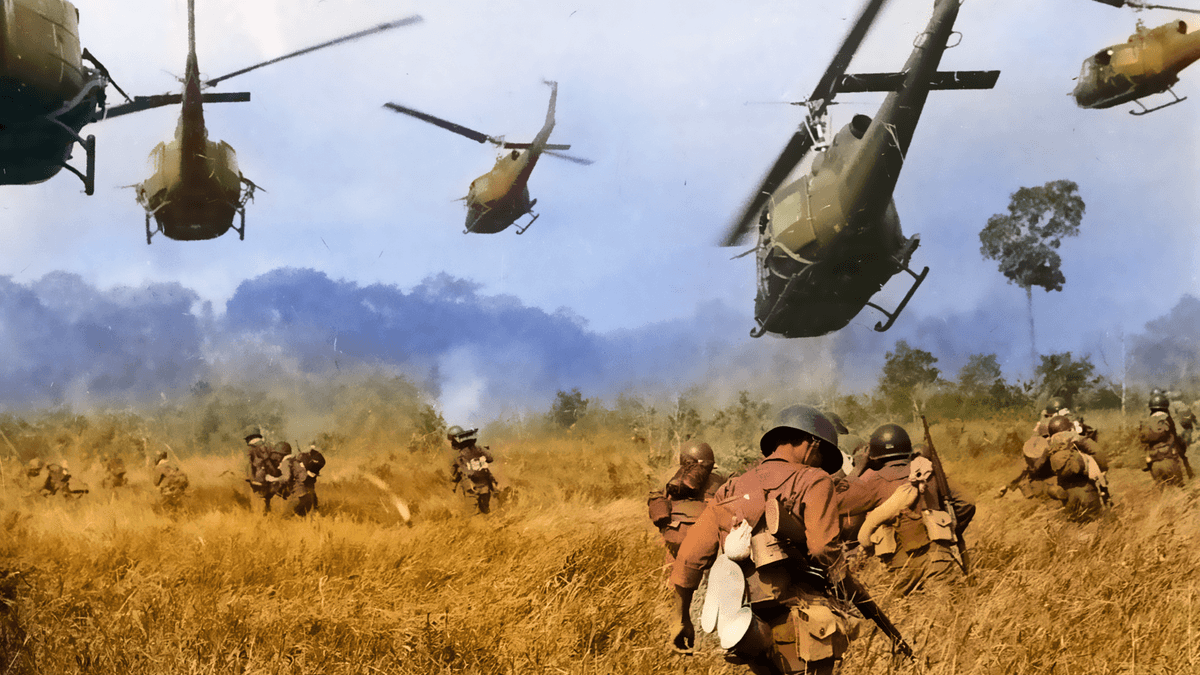
The Vietnam War: Conflict, Cold War, and Consequences
A complex war shaped by colonial history, Cold War fears, and powerful resistance—understand why the Vietnam War happened and why it still matters.
Further Reading
Stay curious!