

The Birth of the Web Browser: A Digital Revolution Begins

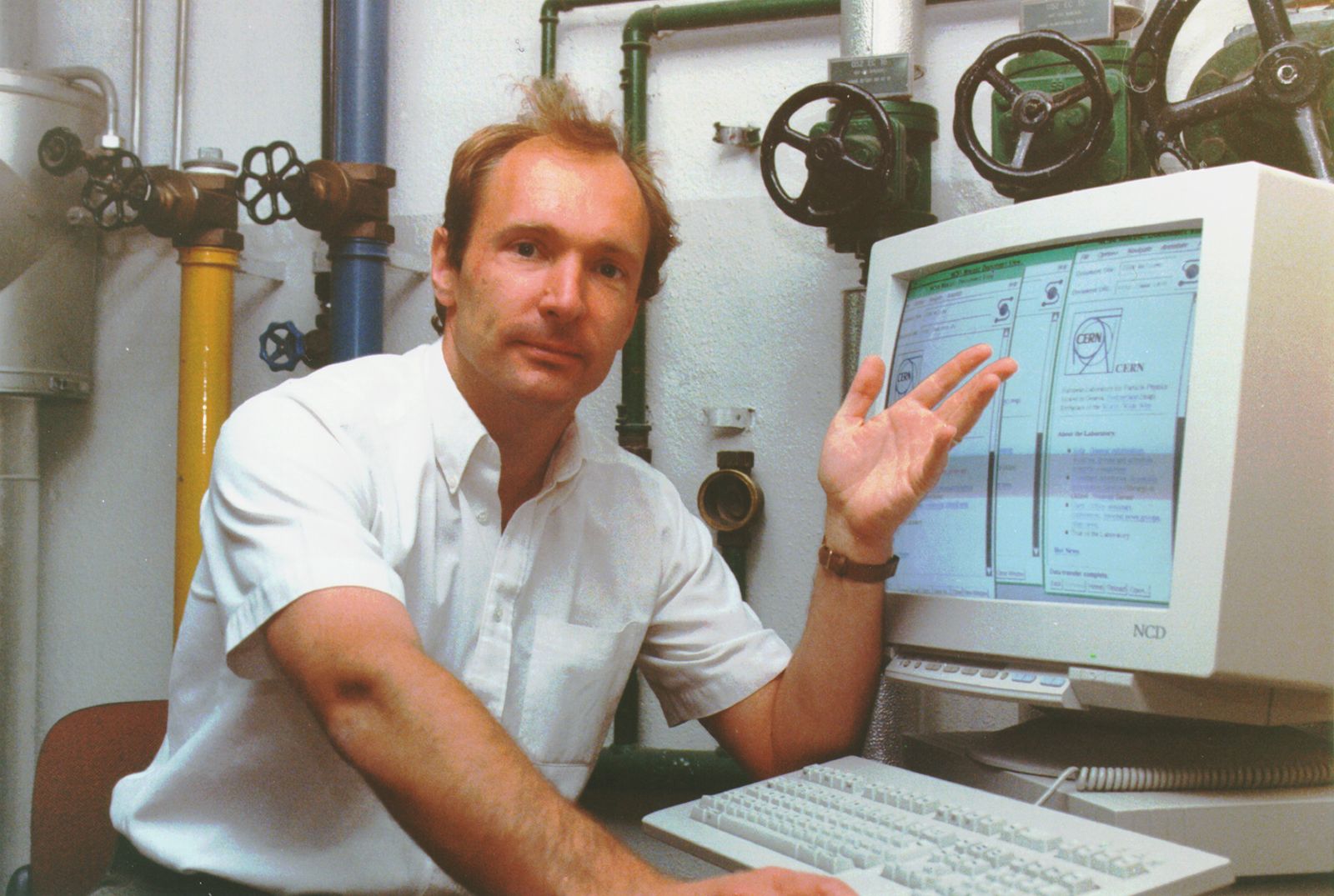
A screenshot of the first web browser, WorldWideWeb, designed by Tim Berners-Lee.
What Happened?
Before the web browser, the internet was an exclusive, text-based labyrinth, accessible only to scientists, researchers, and those fluent in command-line interfaces. Information existed, but it was locked away, scattered across isolated computer systems with no intuitive way to connect or navigate between them.
Tim Berners-Lee’s invention of the WorldWideWeb browser in 1991 shattered these barriers, transforming the internet from an esoteric tool into a public resource. Built on a NeXT computer at CERN, it introduced the now-familiar hyperlink system, allowing users to seamlessly navigate between pages—an innovation that redefined how we access and share information.
Berners-Lee initially considered calling his creation ‘The Information Mesh’ or ‘The Mine of Information’ before settling on ‘WorldWideWeb.’ As its influence grew, the name of the software itself was changed to ‘Nexus’ to distinguish it from the broader web it had helped bring to life.
Unlike modern browsers that passively display content, WorldWideWeb was also a WYSIWYG (what-you-see-is-what-you-get) editor, empowering users to both consume and create content. This early emphasis on interactivity and collaboration was at the heart of Berners-Lee’s vision: a web where users were participants, not just spectators.
In 1993, CERN made a historic decision to release the WorldWideWeb’s source code into the public domain, ensuring that the internet remained an open platform rather than a walled garden controlled by corporate gatekeepers. This act of digital altruism paved the way for a flourishing ecosystem of browsers, including Mosaic, Netscape, and the eventual dominance of Chrome, Firefox, and Safari.
However, as the web evolved, so did its challenges. While the early internet was a decentralized space rich with local communities and independent creators, the past two decades have seen the web increasingly dominated by a handful of corporate entities. The once-free flow of information has been shaped by algorithms designed to maximize engagement, often at the expense of collaboration, creativity, and personal autonomy.
Berners-Lee now warns of the urgent need to reclaim the web’s original promise. Emerging movements like the Solid Protocol aim to return data ownership to individuals, allowing users to control how their personal information is stored and shared. Open-source platforms and decentralized networks offer hope for an internet that serves humanity rather than commercial interests.
Despite its challenges, the influence of the first web browser remains undeniable. Every hyperlink clicked, every online search made, and every digital conversation started can be traced back to that initial vision: a connected world where knowledge is free, information flows openly, and individuals—not corporations—have the power to shape their digital experiences.
Why It Matters
The invention of the web browser was supposed to be a gateway to a decentralized, collaborative, and empowering digital world. It democratized information, turning the internet into a global library, a marketplace, a classroom, and a public square. But today, the web stands at a crossroads. The ideals that drove its creation—openness, autonomy, and the free exchange of ideas—are under threat from centralized control, algorithmic manipulation, and corporate data monopolies. Understanding the history of the web browser is not just about nostalgia—it’s about recognizing the responsibility we have to reclaim the web’s original vision. The fight for an open, human-centered internet isn’t over. It’s happening now, and it’s up to all of us to decide what the next 35 years of the web will look like.
?
Is it possible to reclaim the web’s original vision, or has the internet evolved too far in another direction?
Should access to the internet be a basic human right, like access to clean water and education? Why or why not?
Tim Berners-Lee wanted the internet to encourage collaboration, creativity, and compassion. Do you think the internet today brings people closer together or drives them apart?
Dig Deeper
Tim Berners-Lee is the man who invented the world wide web about 30 years ago. But what is his story? How did the invention of the world wide web come about?
Related
The Regulator Movement: Backcountry Rebellion Before the Revolution
Long before the American Revolution, farmers in North Carolina were already fighting corruption and demanding justice.

Developments in East Asia, 1200–1450
From Confucian bureaucracies to booming cities, East Asia between 1200–1450 reshaped global politics, culture, and technology.

Jim Crow and Plessy v. Ferguson
After Reconstruction, the South built a legal system to enforce racial segregation and strip African Americans of political power. The Supreme Court’s Plessy v. Ferguson decision in 1896 made 'separate but equal' the law of the land—cementing injustice for decades.
Further Reading

Stay curious!