

The Boston Massacre: A Spark for Revolution
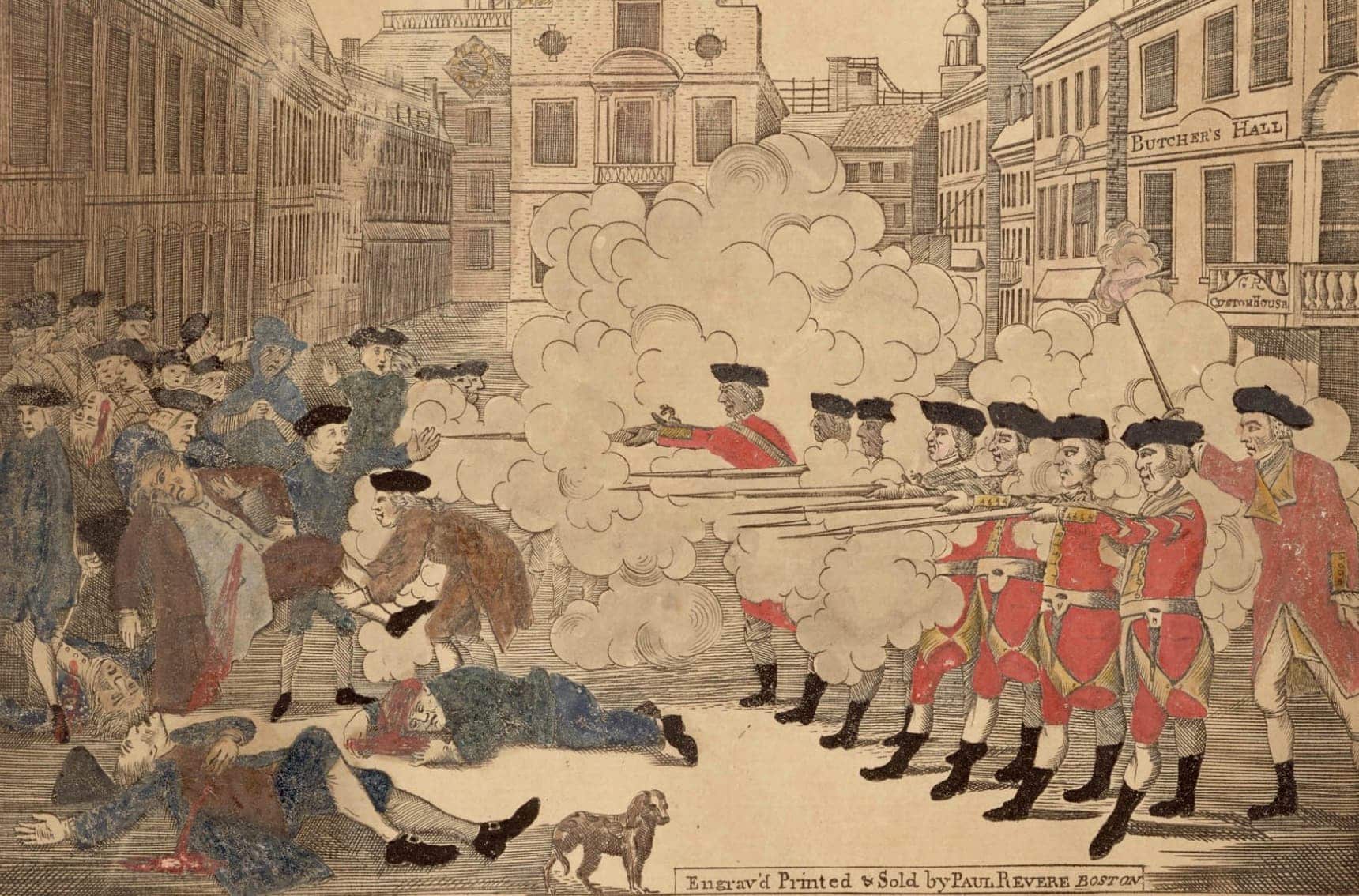
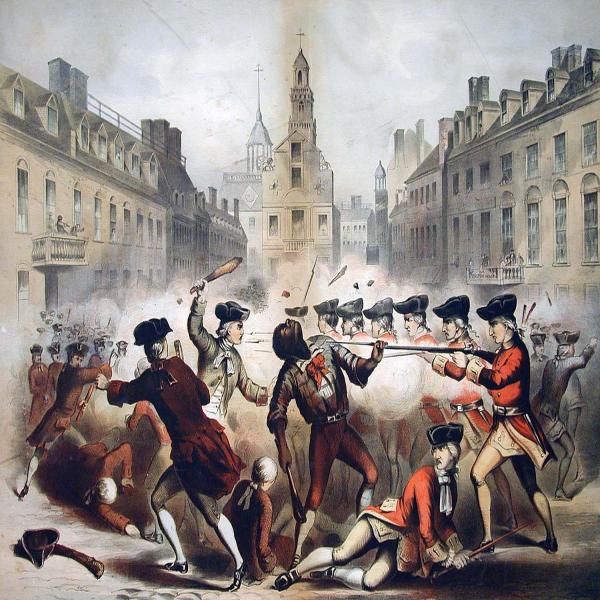
A depiction of the Boston Massacre, showing British soldiers firing into a crowd of unarmed colonists on King Street in Boston.
What Happened?
By 1770, Boston had become a powder keg of resentment against British rule. British troops had occupied the city since 1768 to enforce unpopular tax laws, such as the Stamp Act and the Townshend Acts. Clashes between colonists and soldiers were frequent, and hostility ran deep.
The immediate trigger for the massacre came on the frigid evening of March 5. A lone British sentry, Private Hugh White, was standing guard outside the Custom House when an angry crowd began to taunt and pelt him with snowballs, ice, and stones. As the mob grew, White called for reinforcements. Captain Thomas Preston arrived with several soldiers and formed a defensive line, but the scene quickly spiraled out of control.
Accounts differ as to what happened next. Some say a colonist struck a soldier with a club, causing him to fire his musket. Others claim a voice—possibly from the crowd—yelled 'fire!' leading the troops to open fire. When the smoke cleared, five colonists lay dead or dying: Crispus Attucks, Samuel Gray, James Caldwell, Samuel Maverick, and Patrick Carr. Six others were wounded. The city erupted in outrage, and within hours, Preston and his soldiers were arrested.
The event was immediately seized upon by colonial leaders as a rallying cry against British tyranny. Paul Revere’s now-famous engraving exaggerated the scene, depicting the British soldiers as ruthless executioners firing upon a helpless, unarmed crowd. John Adams, though a staunch patriot, took on the unpopular task of defending the British soldiers in court, arguing that they had acted in self-defense. Most were acquitted, with two found guilty of manslaughter and branded on their thumbs.
Despite the legal outcome, the Boston Massacre became a defining moment in the Revolutionary movement. It deepened distrust between the colonies and Britain, fueled calls for independence, and set in motion a chain of events—including the Boston Tea Party and the First Continental Congress—that would ultimately lead to the American Revolution.
Why It Matters
The Boston Massacre was more than just a tragic skirmish—it was a pivotal moment that galvanized colonial resistance against British rule. It demonstrated the deepening rift between Britain and its American colonies and showcased the power of propaganda in shaping public opinion. The deaths of Crispus Attucks and his fellow victims became symbols of British oppression, and their memory fueled the revolutionary spirit that would ultimately lead to the founding of a new nation. Today, the massacre serves as a reminder of how government overreach and military force can ignite movements for justice and change.
?
How did the presence of British troops in Boston contribute to rising tensions before the massacre?
Why do you think colonial leaders like Samuel Adams and Paul Revere used the Boston Massacre as propaganda?
What role did Crispus Attucks play in the Boston Massacre, and why is he considered a martyr for the Revolution?
How did John Adams’ defense of the British soldiers reflect the legal values of the time?
How might the outcome of the Boston Massacre trial have changed the course of history if the soldiers had been found guilty of murder?
Dig Deeper
The Boston Massacre didn’t come out of nowhere--resentment between the early US colonies and the British army had been brewing for some time over the Stamp Act. A propaganda war ensued between the loyalists and the radicals. John Adams would get his revolutionary start as he worked to resolve this injustice...
Related
The Columbian Exchange: When Worlds Collided
When two previously isolated worlds collided in 1492, the resulting biological, cultural, and economic transformation reshaped every corner of the globe. The Columbian Exchange was not just a swap—it was a world-changing, world-breaking chain reaction.
McCarthyism: Fear, Power, and the Red Scare
In the 1950s, fear of communism gripped America. Senator Joseph McCarthy fueled this fear by accusing hundreds of people of being communist traitors—often without proof. The result was a national panic that tested the meaning of truth, justice, and freedom.
Prelude to War – Sectional Tensions and Failed Compromises
The uneasy balance between free and slave states collapsed in the 1850s, as 'compromises' like the Compromise of 1850 and Kansas-Nebraska Act inflamed tensions instead of easing them.
Further Reading
Stay curious!