

The Day the Dirt Hit D.C.: America Chokes on the Dust Bowl
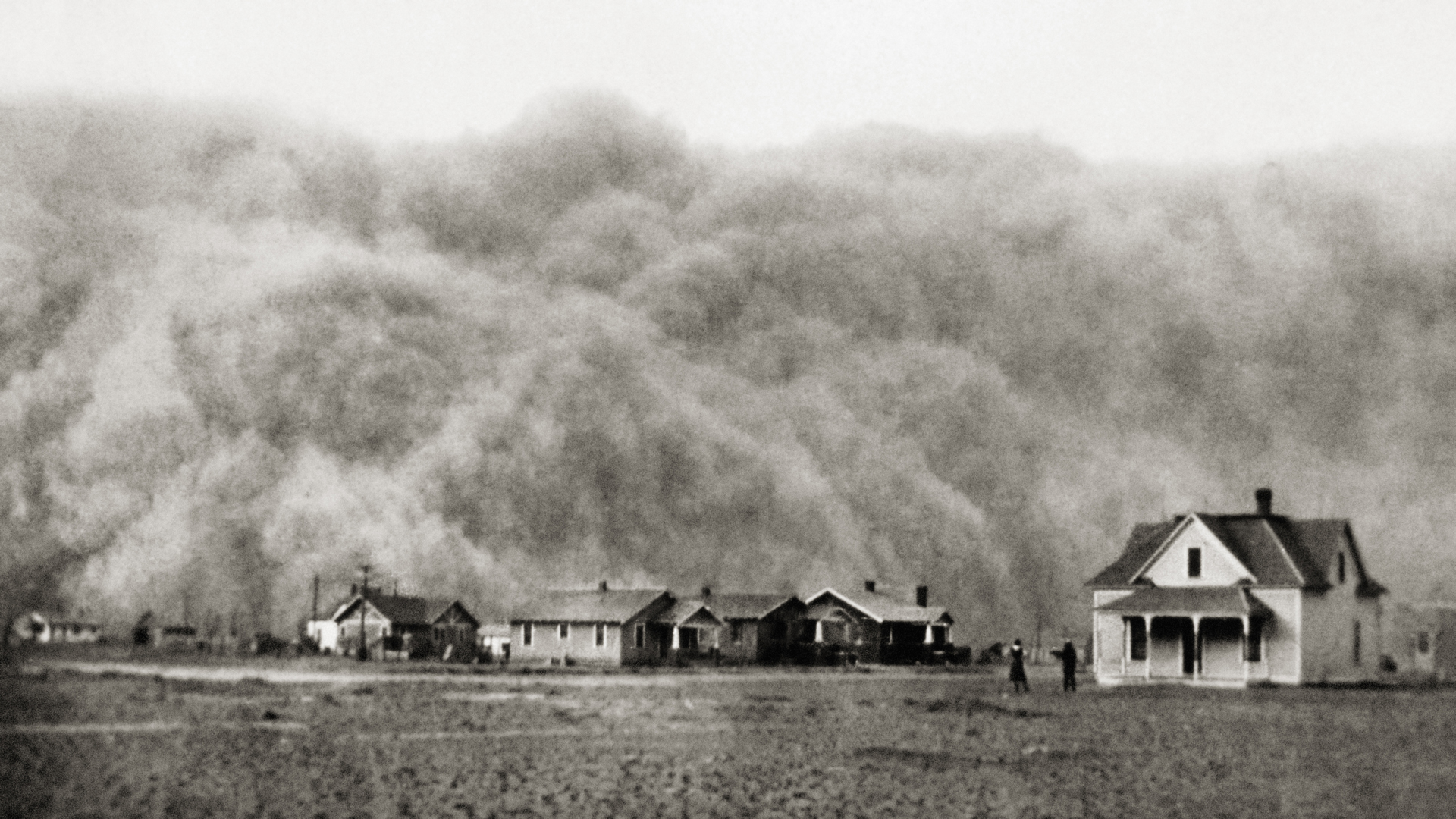
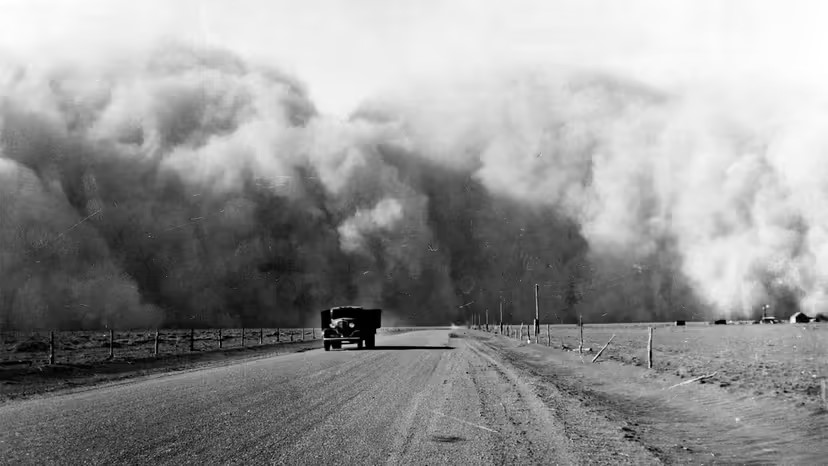
A dust cloud darkens the sky, May 1934, the Dust Bowl.
What Happened?
On this day in 1934, the Great Plains blew into the nation's capital—and nobody could pretend it wasn’t their problem anymore. What had started as poor soil practices and unchecked plowing under the false promise that 'rain follows the plow' culminated in a monster dust storm that blanketed the eastern seaboard. This wasn’t just an environmental catastrophe—it was America’s rude awakening to the consequences of ecological exploitation, misguided land policy, and agricultural greed.
By the early 1930s, a decade of overplowing and one of the worst droughts in American history transformed fertile prairie into a brittle desert. Crops failed. Roots disappeared. The winds came. And the skies turned black.
May 11, 1934, marked the day America could no longer ignore it. A dust storm of apocalyptic proportions—two miles high and sweeping 2,000 miles—descended on cities like Chicago, Washington D.C., and New York. Dust filled the lungs of New Yorkers. Ships 300 miles off the Atlantic coast found their decks coated in Kansas. Congress looked out its windows and saw the bill for a century of bad ideas arrive in real time.
This was the Dust Bowl, a term coined after the infamous 'Black Sunday' storm a year later—but the storm of May 11 was the moment the rest of the nation got front-row seats to an unfolding ecological collapse.
The federal response came fast—by New Deal standards. FDR’s administration declared soil erosion a national menace and launched programs like the Soil Erosion Service, the Prairie States Forestry Project, and eventually the Soil Conservation Service. Farmers were taught how to rotate crops, plant windbreaks, and rethink their relationship to the land.
But it wasn’t enough. By 1936, 850 million tons of topsoil had blown away. Families abandoned their homes in search of work, food, or dignity. Many landed in California, where they were dismissed as 'Okies'—a pejorative blanket term for anyone displaced by the storms, no matter their origin.
What the Dust Bowl revealed was this: you cannot treat the land as an infinite resource and expect no consequences. The soil remembers. The wind delivers the receipts.
Why It Matters
May 11, 1934, wasn’t just the day a dust storm blotted out the Capitol—it was the day environmental catastrophe became visible to the powerful. It helped birth modern conservation efforts, reshaped farming practices, and left behind a legacy of migration, hardship, and ecological humility. It was a warning from the Earth, scrawled in black across the sky.
?
How did the Homestead Act contribute to the ecological disaster of the Dust Bowl?
What myths about climate and agriculture led to the overdevelopment of the Great Plains?
How did the New Deal attempt to respond to the Dust Bowl, and were those efforts successful?
What was the long-term impact of the Dust Bowl on American farming and environmental policy?
How can we learn from the Dust Bowl in facing today's climate and ecological crises?
Dig Deeper
On May 11, 1934, a dust storm blowing from the Great Plains blanketed much of the nation's Mid-Atlantic region due to decades of poor farming practices and chronic drought conditions.
Learn how President Franklin Roosevelt responded to one of the worst man-made environmental disasters in American history--the Dust Bowl.
Related
U.S. Imperialism: The Spanish-American War and Its Aftermath
In 1898, the United States fought Spain in a short war that reshaped its identity—from a republic born in anti-colonial revolution to a global imperial power with overseas territories.
Jim Crow and Plessy v. Ferguson
After Reconstruction, the South built a legal system to enforce racial segregation and strip African Americans of political power. The Supreme Court’s Plessy v. Ferguson decision in 1896 made 'separate but equal' the law of the land—cementing injustice for decades.
The Great Depression: America in Crisis
The Great Depression was more than a stock market crash — it was a decade-long test of American resilience that reshaped the nation's economy, politics, and daily life.
Further Reading
Stay curious!