
The Birth of the United Nations
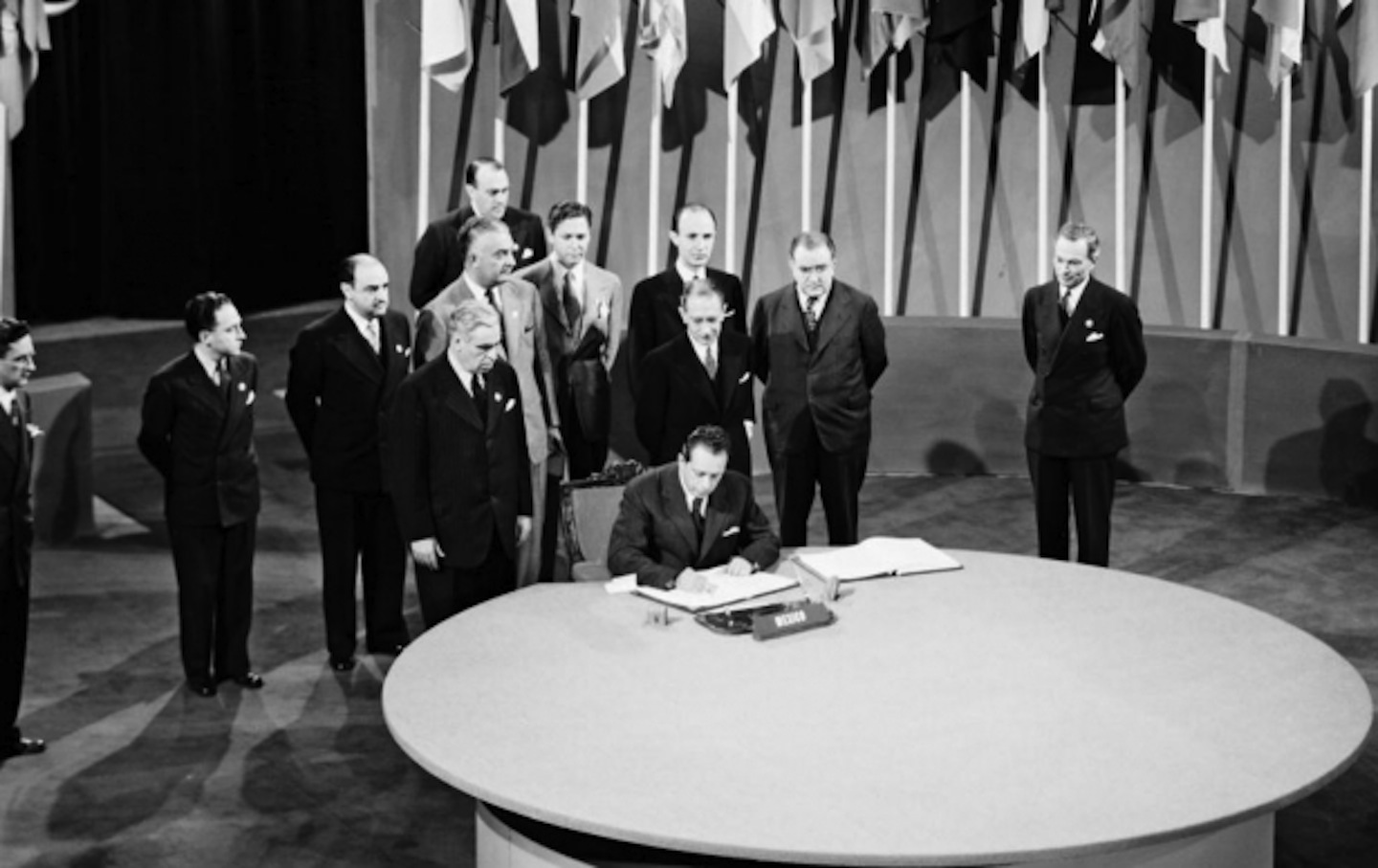
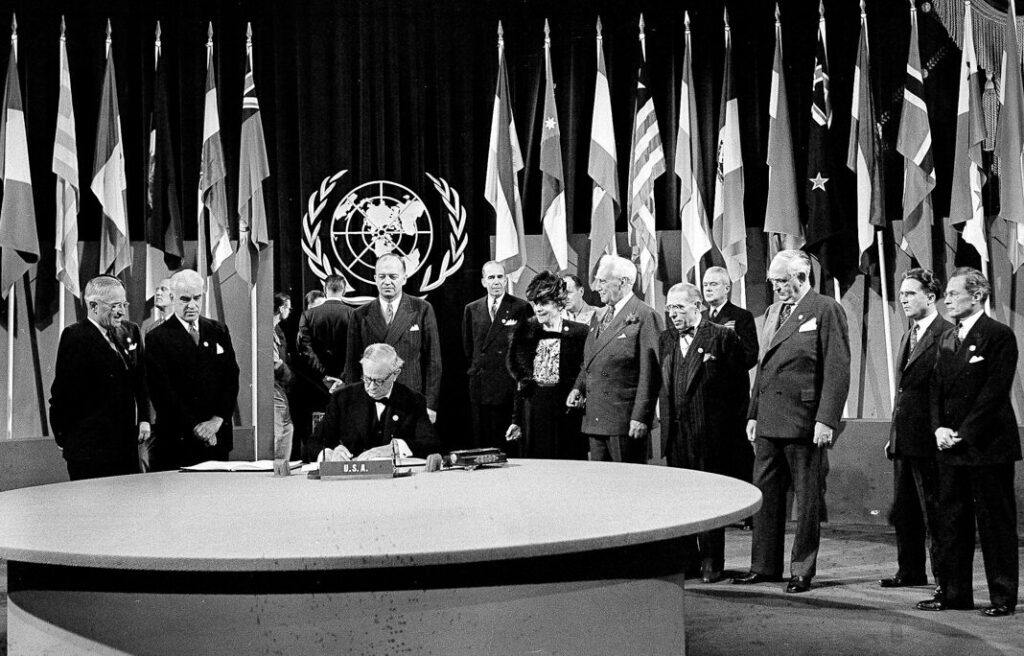
Delegates from around the world gather at the United Nations Conference in San Francisco to sign the Charter in 1945.
What Happened?
San Francisco, June 26, 1945. Inside the ornate walls of the Herbst Theater, 50 nations signed a bold new blueprint for peace: the United Nations Charter. With over 8 million war deaths still fresh in memory, the world needed more than treaties—it needed transformation.
The Charter committed signatories to 'save succeeding generations from the scourge of war,' promote human rights, uphold international law, and build a platform for global cooperation. For the first time, war and peace weren’t just national issues—they were global responsibilities.
This wasn’t the world’s first try. The League of Nations—formed after World War I—had failed. But the idea of global collaboration had evolved. As early as 1941, Roosevelt and Churchill imagined a postwar order based on freedom, security, and collective action through the Atlantic Charter.
The name 'United Nations'—coined by Roosevelt—became official in 1942 when 26 Allied countries committed to fighting fascism together. But after the guns stopped firing, the harder fight began: building lasting peace.
The groundwork was laid through global conversations—from Moscow to Dumbarton Oaks to Yalta—where the Big Three (U.S., U.K., USSR) negotiated structure, voting rights, and membership. All nations who had signed the 1942 declaration and declared war on Germany or Japan were invited to San Francisco to shape the Charter.
After months of debate and drafting, the final Charter—comprising a preamble and 111 articles—outlined the framework for six primary bodies: the General Assembly, Security Council, Secretariat, Economic and Social Council, International Court of Justice, and Trusteeship Council.
The Charter became legally binding on October 24, 1945, when ratified by the five permanent Security Council members and a majority of other signatories. The first General Assembly opened in London in January 1946. And in 1949, the cornerstone of the U.N.’s permanent headquarters was laid in New York City.
Since then, the U.N. has navigated Cold War tensions, peacekeeping missions, humanitarian crises, and environmental challenges. It’s far from flawless. But for a fractured world, it remains one of the most ambitious efforts ever made to turn hope into structure—and solidarity into policy.
Why It Matters
The signing of the U.N. Charter wasn’t just a diplomatic handshake—it was a collective moral stand against war, fascism, and genocide. It acknowledged that global problems require global solutions, and it remains one of the clearest symbols of humanity’s desire to replace bullets with dialogue. In a world still haunted by conflict, the U.N.’s founding reminds us: peace doesn’t happen by accident—it’s something we choose, build, and defend together.
?
Why did the League of Nations fail, and how did the U.N. aim to fix those flaws?
What were the roles of the U.S., U.K., USSR, and China in shaping the U.N.?
How has the U.N. lived up to—or fallen short of—its founding goals?
Why is international cooperation difficult, and what makes it worth pursuing?
Should every country have equal power in global organizations like the U.N.?
Dig Deeper
A look back at the formation of the U.N., its global impact, and the high hopes behind its founding after World War II.
Related
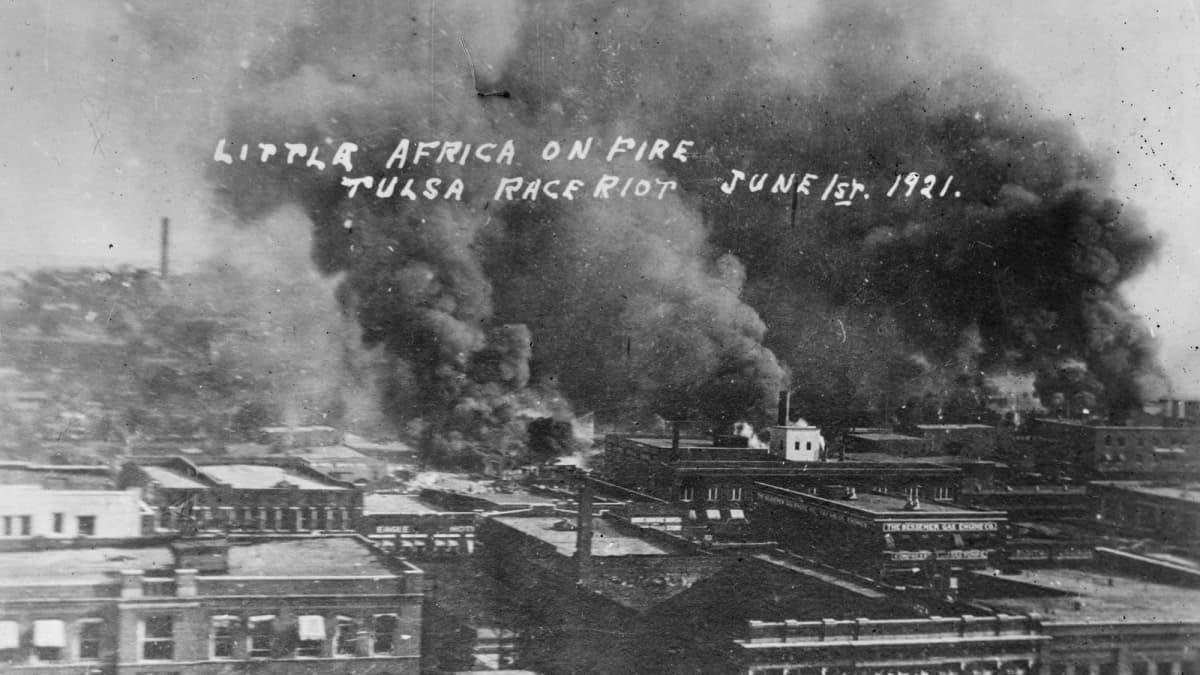
The Tulsa Race Massacre: Black Wall Street Burned
Greenwood was known as Black Wall Street—until a white mob burned it to the ground. The Tulsa Race Massacre wasn’t a riot. It was a coordinated attack. And it was nearly erased from history.
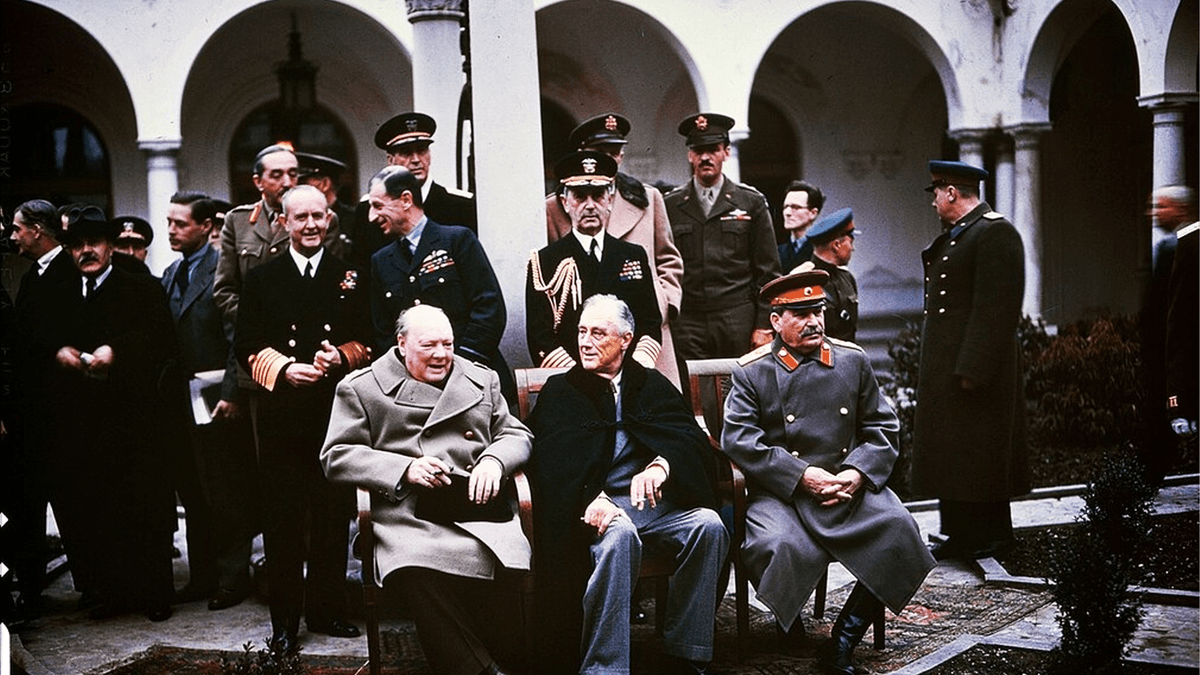
The Cold War & Fear at Home: Ideology, Power, and Public Anxiety
A global rivalry shaped by fear, ideology, and the constant tension between freedom and security.
The First Amendment: America’s Blueprint for Freedom
The First Amendment protects freedoms of speech, religion, press, assembly, and petition. It’s the foundation of American democracy—but also a source of constant debate and interpretation.
Further Reading
Stay curious!