

The Chinese Exclusion Act Becomes Law
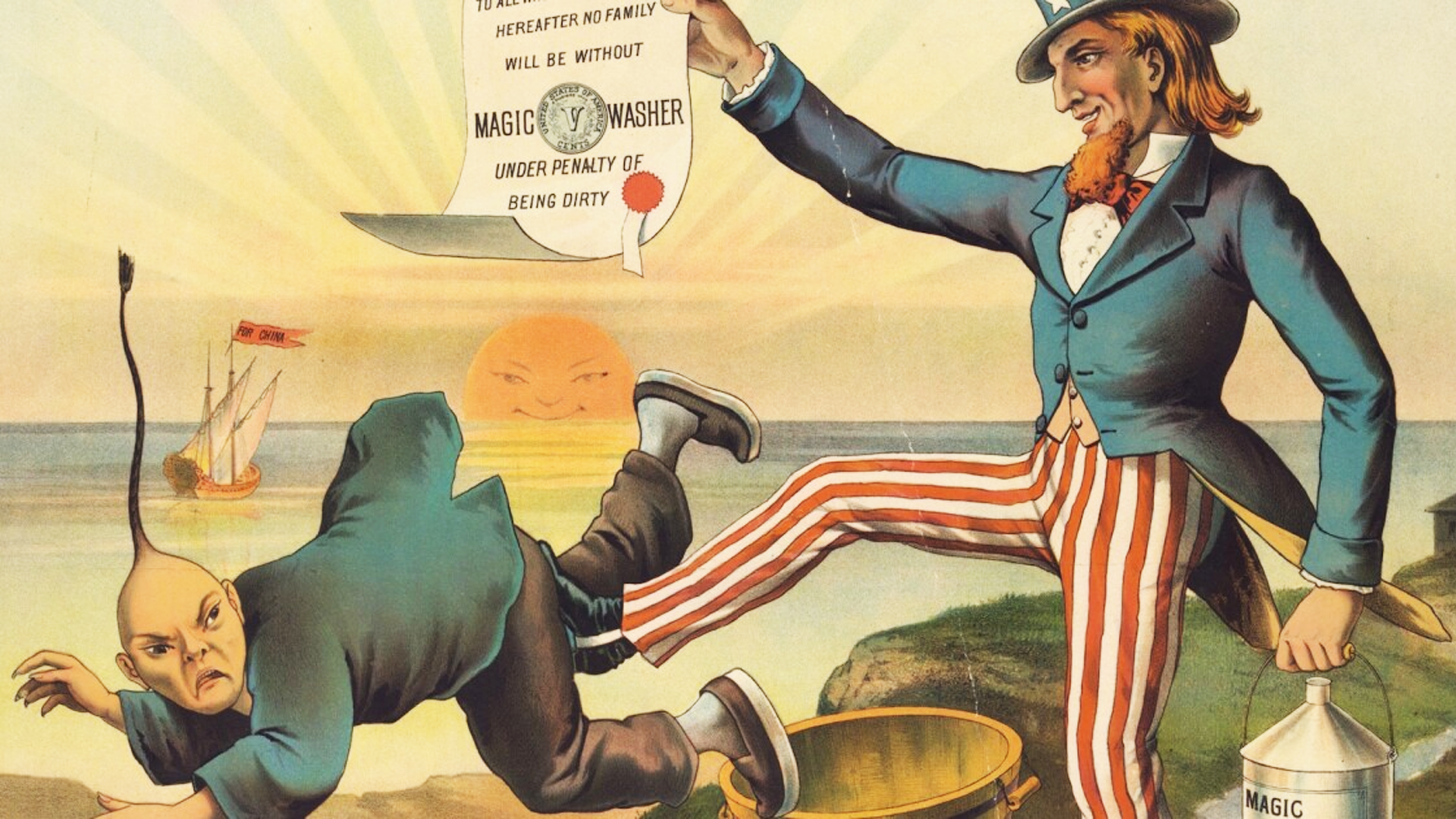
Political cartoon and historical illustration connected to the Chinese Exclusion Act of 1882
What Happened?
During the 1800s, thousands of Chinese immigrants came to the United States seeking work, opportunity, and safety from economic hardship and instability in China. Many worked in mining camps, factories, farms, and on the Transcontinental Railroad, helping connect the country from coast to coast. Yet even as Chinese workers contributed to the growth of the nation, they often faced discrimination, violence, and hostility from white Americans who blamed immigrants for low wages and economic struggles.
As economic fears grew after the Panic of 1873, politicians and newspapers increasingly used Chinese immigrants as scapegoats. Anti-Chinese groups spread racist ideas claiming Chinese workers could never truly belong in American society. Violent attacks against Chinese communities became more common across the West Coast, while lawmakers pushed for restrictions designed specifically to target Chinese immigrants.
On May 6, 1882, Congress passed the Chinese Exclusion Act, and President Chester A. Arthur signed it into law. The act banned most Chinese laborers from immigrating to the United States for ten years and prevented many Chinese immigrants already living in the country from becoming citizens. It was the first major federal immigration law in American history to openly restrict immigration based primarily on race and nationality.
The law did not completely stop Chinese immigration, but it created a harsh system of surveillance, documentation, and exclusion. Chinese immigrants who left the country often needed special certificates to return. Families were separated for years, and many people lived under constant fear of deportation or discrimination. Over time, Congress expanded the restrictions through laws like the Geary Act, making the system even more severe.
The Chinese Exclusion Act also helped transform the role of the federal government in immigration enforcement. Historians often describe this era as the beginning of America becoming a modern 'gatekeeping nation,' where immigration laws, border controls, and deportation systems became much more powerful. Ideas about who counted as an 'American' and who was treated as a permanent outsider were shaped in large part through these policies.
Although the law targeted Chinese immigrants, its impact reached far beyond one community. The act encouraged broader anti-Asian policies around the world and influenced later immigration restrictions against many other groups. It also reinforced harmful stereotypes that immigrant communities were dangerous, untrustworthy, or unable to belong—ideas that continued to appear throughout American history.
The Chinese Exclusion Act was finally repealed in 1943 during World War II, though strict immigration quotas remained for decades afterward. Today, the law is remembered as a warning about how fear and prejudice can become government policy. It reminds us that immigration debates are not only about borders and laws, but also about human dignity, belonging, and the ongoing struggle to live up to the ideals of equality and fairness.
Why It Matters
The Chinese Exclusion Act reveals how quickly fear, racism, and economic anxiety can shape national policy. It helped create modern immigration enforcement systems and normalized the idea that certain groups could be excluded based on race or nationality. Understanding this history helps us think more carefully about immigration, civil rights, citizenship, and the ways prejudice can become embedded in law.
?
Why were Chinese immigrants targeted during the late 1800s?
How did the Chinese Exclusion Act change immigration policy in the United States?
What effects did the law have on Chinese families and communities?
How did economic fear contribute to anti-immigrant attitudes?
Why is it important to study laws like the Chinese Exclusion Act today?
Dig Deeper
A deeper look at the history, causes, and consequences of the Chinese Exclusion Act and the anti-Chinese violence that followed.
Related
The Bill of Rights: What Is It and What Does It Actually Do?
The Bill of Rights wasn’t added to the Constitution because everything was going great, it was added because the people didn’t trust the government. And they had every reason not to.
McCarthyism: Fear, Power, and the Red Scare
In the 1950s, fear of communism gripped America. Senator Joseph McCarthy fueled this fear by accusing hundreds of people of being communist traitors—often without proof. The result was a national panic that tested the meaning of truth, justice, and freedom.

The First Amendment: America’s Blueprint for Freedom
The First Amendment protects freedoms of speech, religion, press, assembly, and petition. It’s the foundation of American democracy—but also a source of constant debate and interpretation.
Further Reading
Stay curious!