

McKinley Calls for War
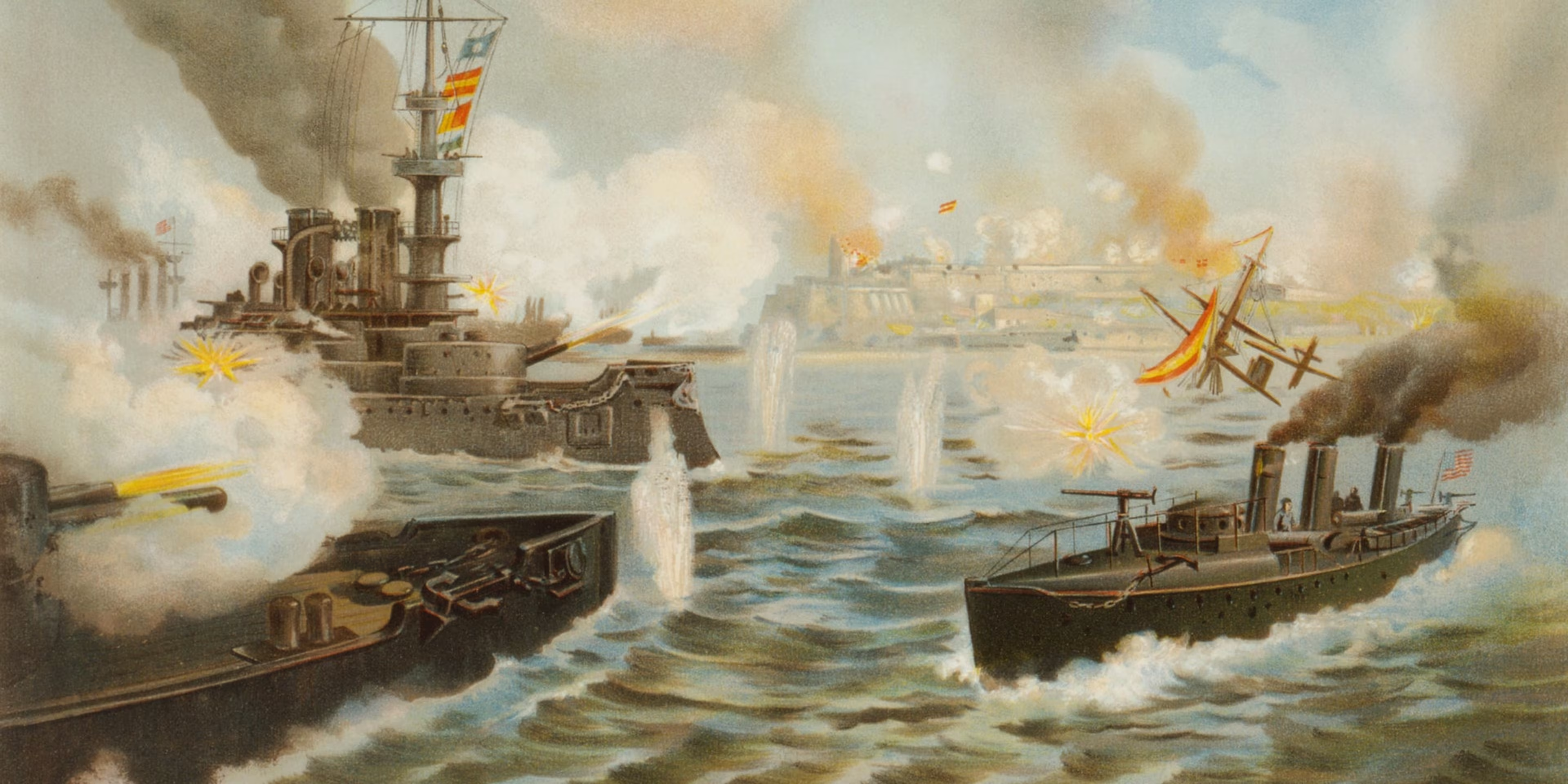
Pushed by public outrage after the mysterious explosion of the USS Maine in Havana Harbor—and fueled by sensationalist media—McKinley told Congress it was time to step in.
What Happened?
By the late 1890s, Cuba was fighting for independence from Spain, and many Americans supported the Cuban cause. Reports of harsh Spanish policies, including the forced relocation of civilians into camps with poor conditions, shocked the American public and built sympathy for Cuban rebels.
At the same time, newspapers played a powerful role in shaping public opinion. Competing publishers used dramatic headlines and emotional stories—sometimes exaggerating events—to increase sales and stir outrage. This type of reporting, often called 'yellow journalism,' helped push the United States closer to war.
Tensions escalated even further in February 1898, when the U.S. battleship USS Maine exploded in Havana Harbor, killing more than 250 sailors. Although the exact cause of the explosion was unclear, many Americans blamed Spain, and calls for war grew louder across the country.
President McKinley was cautious and initially hoped to avoid war through negotiation. He even attempted to mediate between Spain and Cuban rebels, but neither side agreed. As pressure increased from Congress, the public, and political allies, McKinley sent a message to Congress on April 11 asking for authority to intervene in Cuba.
In his request, McKinley gave several reasons for intervention. He argued that the United States had a responsibility to stop suffering in Cuba, protect American citizens and property, and ensure stability in a region important to U.S. trade and security. Interestingly, he did not directly blame Spain for the Maine explosion, even though many Americans saw it as the main cause for war.
Congress approved his request, and within weeks, the United States was at war with Spain. Although the war was short, its results were significant. The U.S. gained control of territories like Puerto Rico, Guam, and the Philippines, and expanded its influence far beyond its borders—marking a shift from a nation focused on its own continent to one involved in global affairs.
Why It Matters
April 11, 1898 marked a turning point not only for Cuba but for the United States. What began as a humanitarian effort soon evolved into a pursuit of power and territorial influence. The moment signaled that the U.S. was shifting from a republic focused on its own borders to a nation with imperial ambitions. The path to the Spanish-American War was shaped by a complex mix of humanitarian concern, economic interests, political pressure, and media influence—not a single cause. This moment reminds us that decisions about war are rarely simple, and their consequences can shape history for generations. Even today, it raises difficult questions about how far a democracy should go to “spread freedom” and what it risks in the process.
?
What role did the media play in pushing the U.S. toward war with Spain? How does that compare to media influence today?
Why did the U.S. gain control of places like Guam and the Philippines after a war supposedly fought for Cuban independence?
What were President McKinley’s original goals, and how did they shift under public and political pressure?
Why do some historians call this a ‘war of imperialism’? What does that term mean?
How does the story of the Spanish-American War complicate the idea of America as a 'liberator' in global conflicts?
Dig Deeper
Explore how the war started, what happened in battle, and how the U.S. went from a republic to a rising empire in just four months.
Related
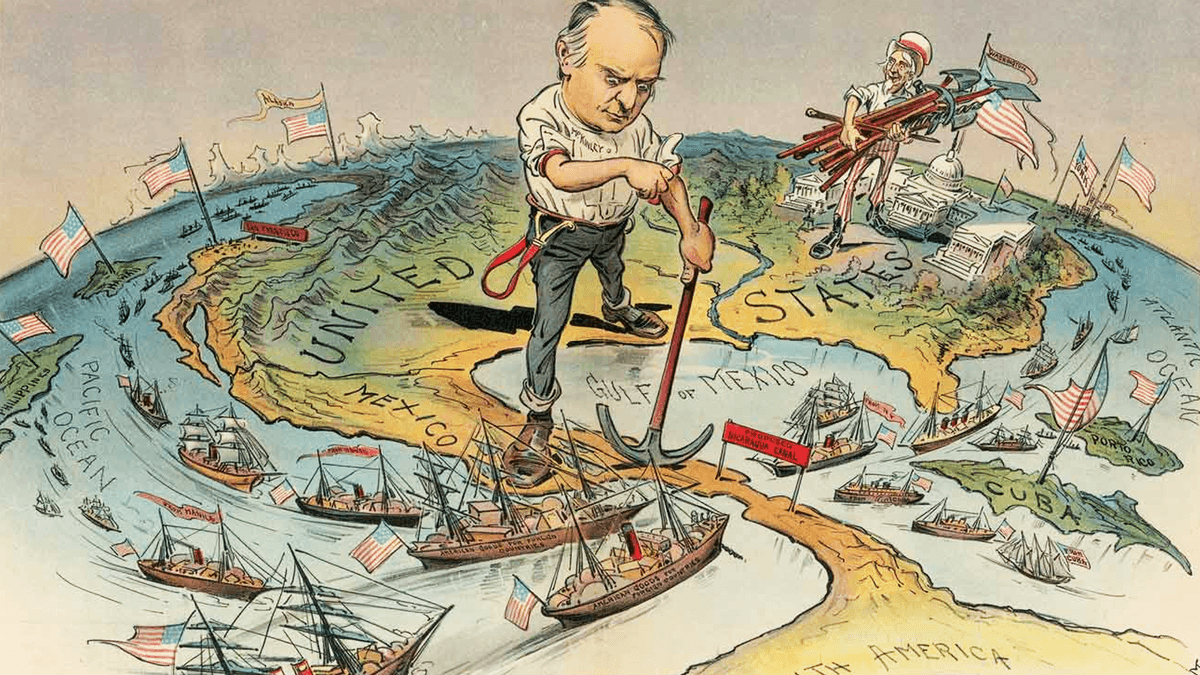
U.S. Imperialism: The Spanish-American War and Its Aftermath
In 1898, the United States fought Spain in a short war that reshaped its identity—from a republic born in anti-colonial revolution to a global imperial power with overseas territories.
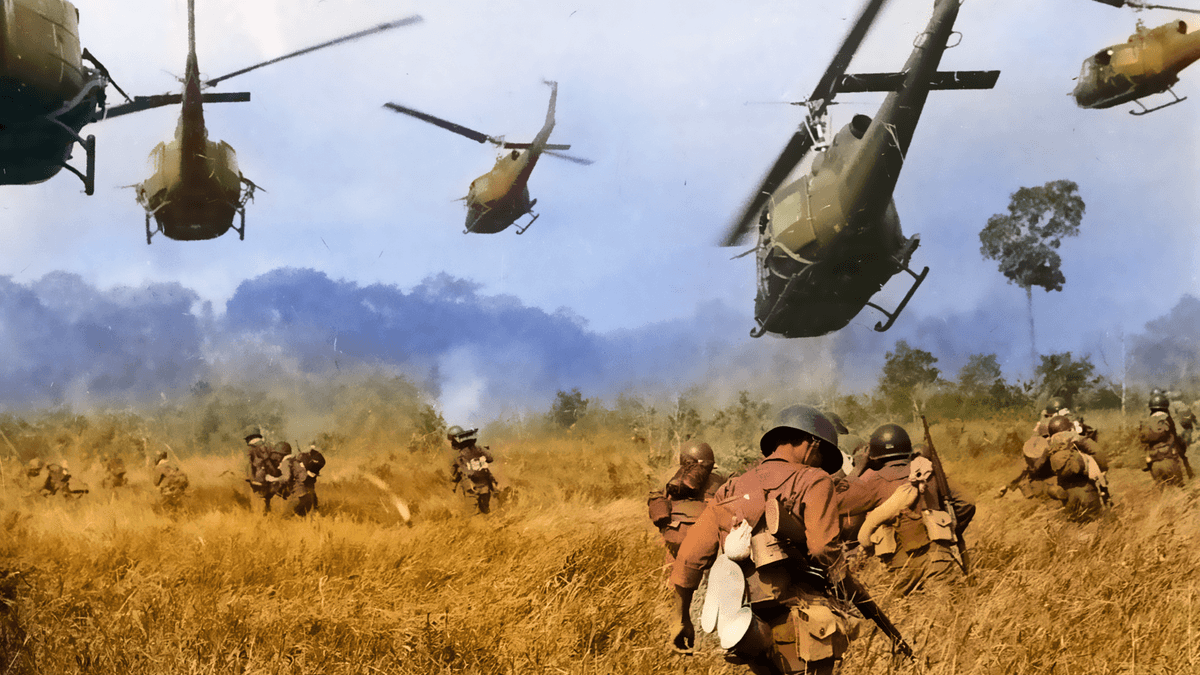
The Vietnam War: Conflict, Cold War, and Consequences
A complex war shaped by colonial history, Cold War fears, and powerful resistance—understand why the Vietnam War happened and why it still matters.
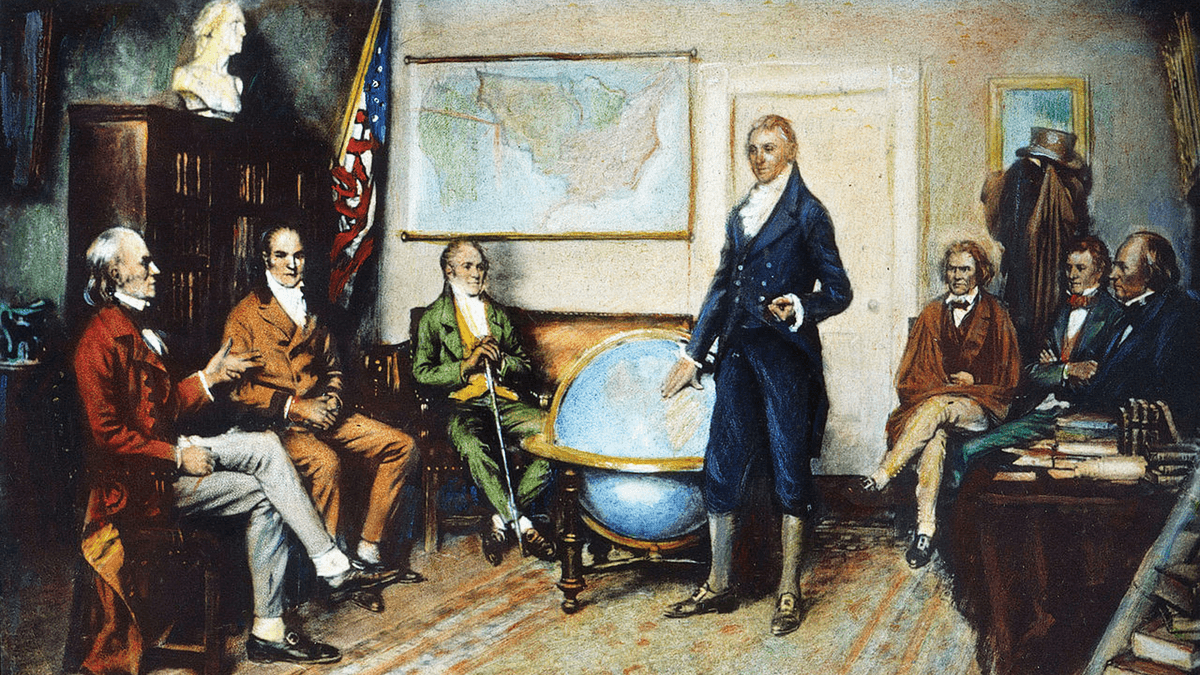
The Monroe Doctrine
How a young United States told the world to stay out of the Western Hemisphere—and what that meant for the Americas.
Further Reading
Stay curious!