

1899: The Newsboys Strike Shakes New York
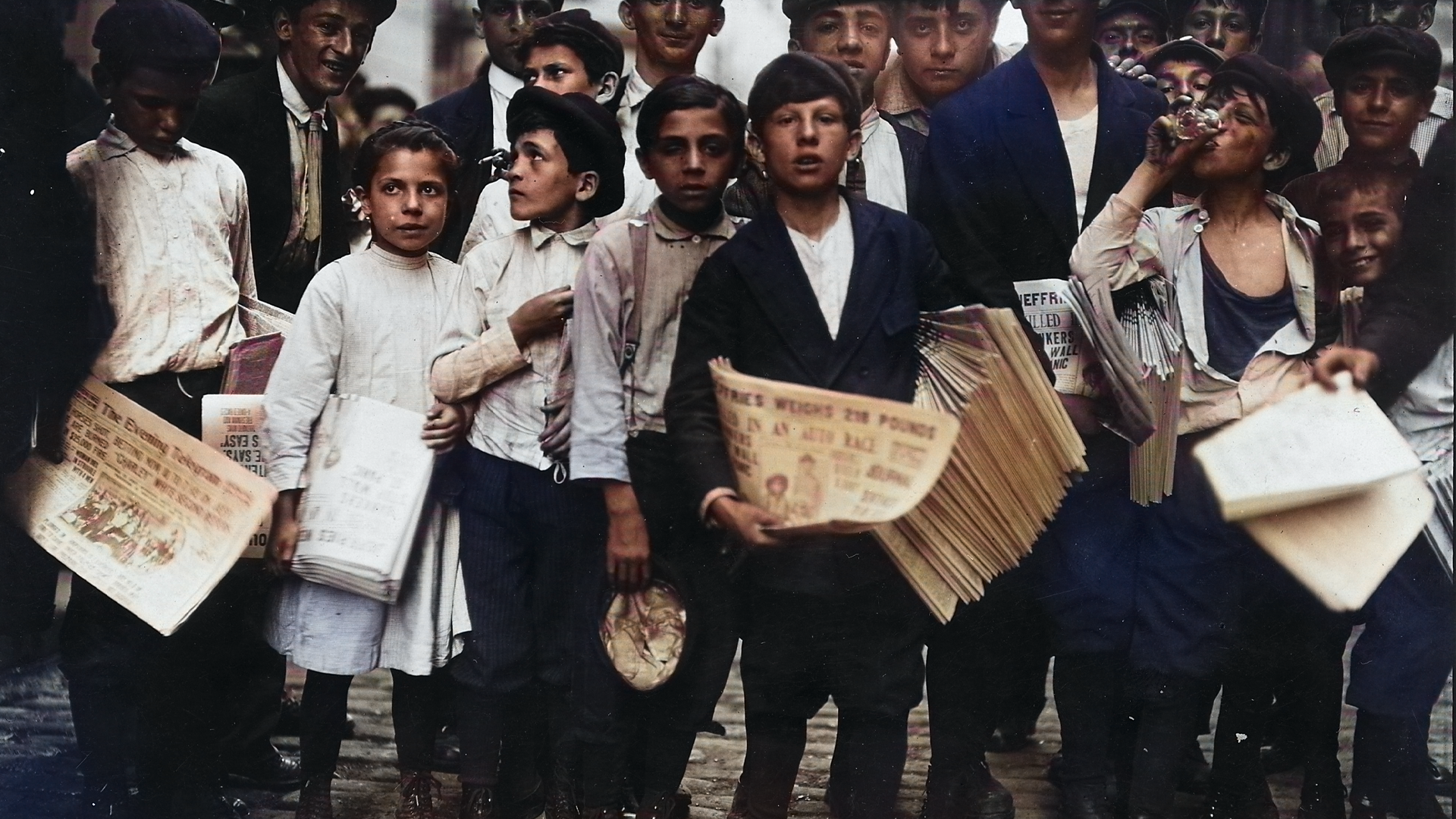
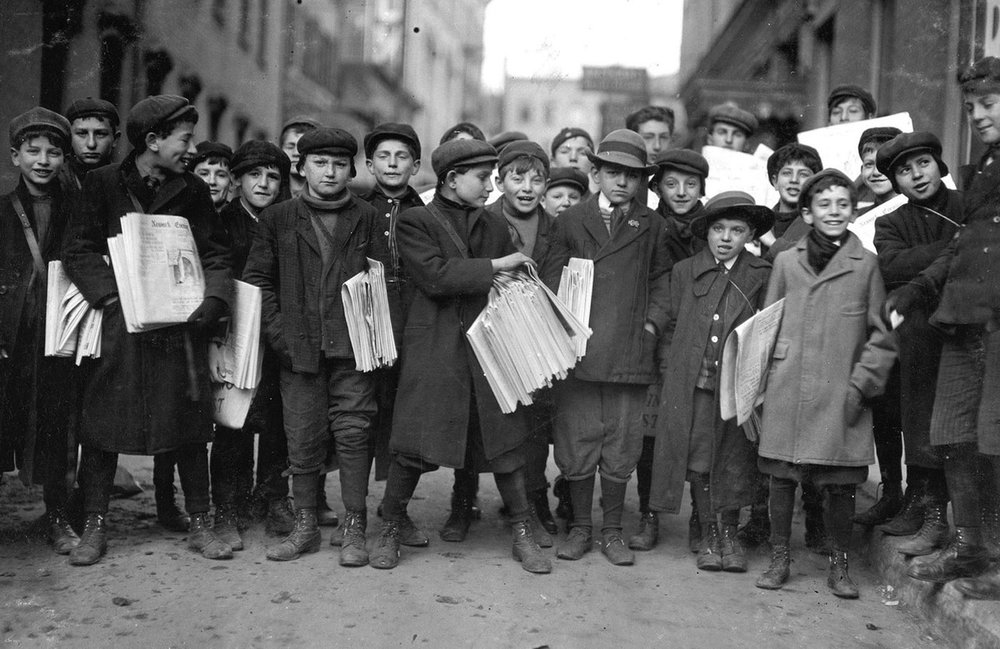
Young newsboys gathered in New York City during the 1899 strike.
What Happened?
On July 18, 1899, something remarkable happened in New York City. Thousands of working children, some as young as ten years old, went on strike. They marched across bridges, held mass meetings, and refused to sell two of the biggest newspapers in the country. These children were called “newsies.” And for two hot weeks in July and August, they stood up to the powerful newspaper owners and demanded fairness. This was the Newsboys’ Strike of 1899—the largest child-led strike in American history.
At the turn of the twentieth century, newsboys were essential to newspaper sales. Afternoon papers depended almost entirely on children selling them on busy street corners. Most of these boys came from poor immigrant families. Some were orphans. Many lived in crowded boarding houses and worked long hours after school just to survive. A newsboy would buy 100 newspapers from a publisher for about 50 or 60 cents and sell each one for a penny. If he sold them all, he earned a small profit. But if he did not sell every paper, he lost money. There were no refunds.
The problem began in 1898, during the Spanish-American War. Because war headlines sold quickly, newspaper publishers raised the price that newsboys had to pay—from 50 cents per hundred papers to 60 cents. While the war lasted, the boys could manage because sales were high. But when the war ended, most newspapers lowered their prices again. Two powerful publishers—Joseph Pulitzer and William Randolph Hearst—refused to do so. Their papers, the New York World and the New York Journal (the World and the Journal), kept charging the higher wartime price. For boys who already struggled to earn enough for food and lodging, that extra 10 cents made a real difference.
On July 18, 1899, the boys decided they had had enough. They organized. They held meetings in City Hall Park and later at Irving Hall. They elected leaders, including an outspoken teenager known as Kid Blink. They marched through the streets, blocked newspaper deliveries, and encouraged the public not to buy the two papers. At first, there were clashes between strikers and those who tried to sell the papers. But soon the boys focused on organized demonstrations and public support. Circulation of the World dropped dramatically, showing that the strike was working.
After nearly two weeks of lost sales and public pressure, the publishers agreed to negotiate. They refused to lower the wholesale price back to 50 cents, but they offered a compromise. They would keep the price at 60 cents per hundred papers, yet they would agree to buy back any unsold copies. This change protected the boys from losing money on papers they could not sell. On August 1, 1899, the newsboys accepted the deal, and the strike officially ended the next day.
The Newsboys’ Strike of 1899 was about more than pennies. It was about working children demanding fairness from wealthy businessmen. At a time when child labor was common and legal, these boys proved they were not powerless. They organized, spoke out, and won meaningful change. Their story reminds us that democracy isn't just shaped by presidents and lawmakers. Sometimes it's shaped by ordinary people—even children—who decide that unfair is unfair and have the courage to stand together.
Why It Matters
The Newsboys Strike of 1899 reminds us that fairness in the workplace has often been won through courage and collective action. At a time when child labor was common and legal protections were weak, these young workers organized themselves to demand better treatment. Their story helps us understand the history of labor rights, the importance of standing together, and the role young people can play in shaping change.
?
Why were the newsboys especially hurt when the publishers refused to lower their wholesale prices after the war?
How did the newsboys organize themselves to make their strike effective?
Why do you think the publishers eventually agreed to a compromise?
What does the Newsboys Strike teach us about the power of collective action?
Dig Deeper
A look at how thousands of newsboys challenged powerful newspaper publishers during the summer of 1899.
Related
The Gilded Age: Glitter, Growth, and the Cost of Progress
A glittering era of innovation and industry, the Gilded Age promised progress but delivered inequality. In the South, leaders dreamed of a 'New South,' yet industrialization offered opportunity for some while reinforcing systems of poverty and discrimination for others.
The Progressive Era: Reform, Regulation, and the Limits of Change
From breaking up monopolies to marching for women’s votes, the Progressive Era sought to fix America’s problems — but often left some voices out of the conversation.
Thomas Jefferson’s Balancing Act: Power, Principles, and Pirates
He wanted smaller government. He ended up doubling the country. Jefferson’s presidency is the story of a man trying to shrink power—and finding out how complicated that gets when the world comes knocking.
Further Reading
Stay curious!