

Pierre and Marie Curie Discover Radium
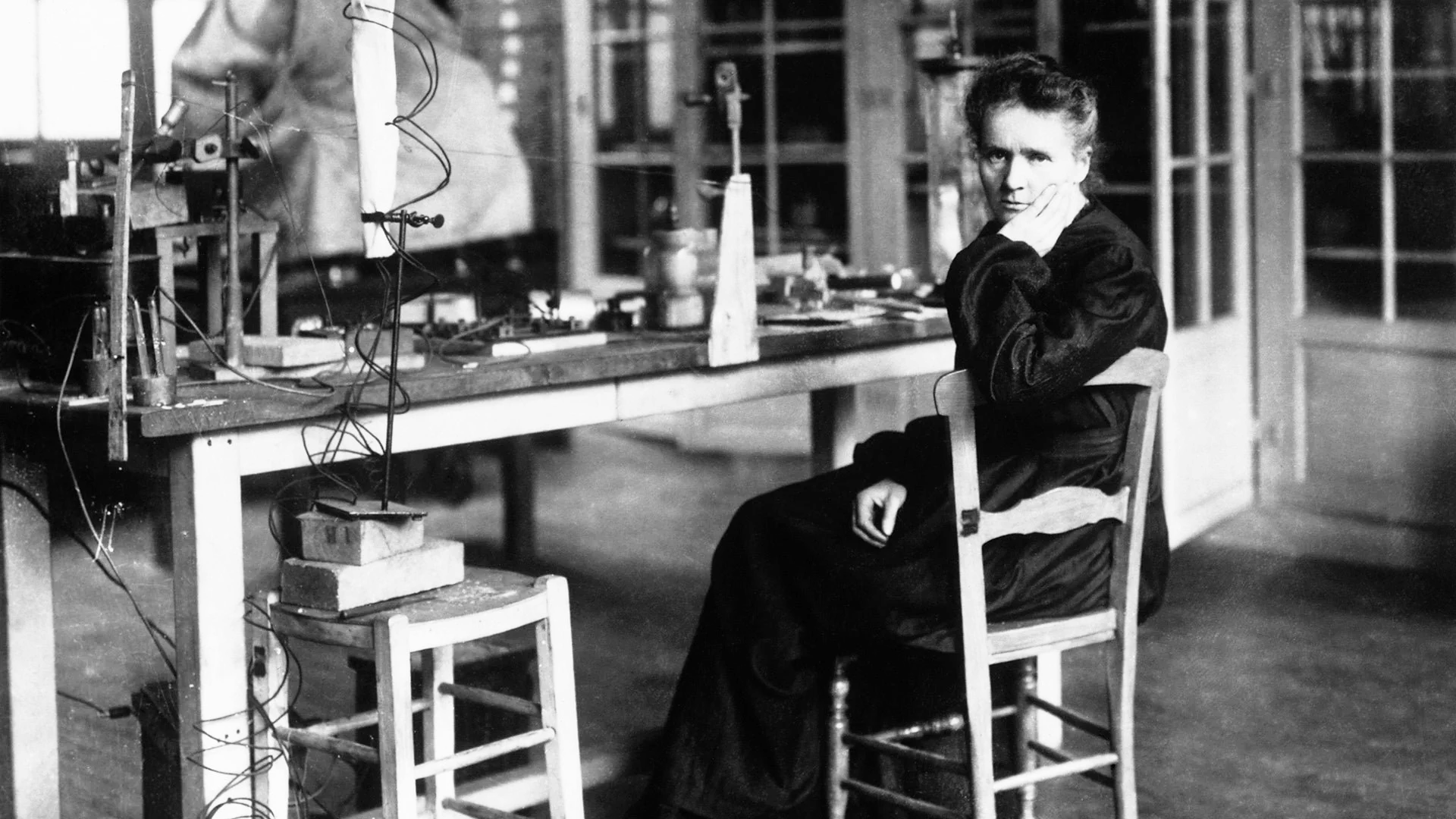
Pierre and Marie Curie uncovered radium and changed how scientists understand atoms, energy, and matter itself.
What Happened?
In late 19th-century Europe, science was rapidly changing how people understood the natural world. On December 21, 1898, Pierre and Marie Curie announced the discovery of radium, a mysterious new element that released energy from inside its atoms. This breakthrough helped reveal that atoms were not solid and unchanging, but active and powerful.
Marie Curie, born Maria Skłodowska in Poland, faced enormous barriers simply because she was a woman. Universities in her home country would not admit women, so she secretly studied science at night and worked for years to support herself and her sister. When she finally moved to Paris to study at the Sorbonne, she excelled through determination and discipline.
Pierre Curie was already a respected scientist known for his work on magnetism and crystals. When Marie began researching strange rays released by uranium, Pierre joined her, and together they formed one of the most important scientific partnerships in history. Marie coined the word “radioactivity” to describe this new atomic behavior.
While studying uranium-rich minerals, the Curies discovered that some ores were far more radioactive than uranium alone. This led them to conclude that unknown elements must be present. In 1898, they identified two new elements: polonium, named after Marie’s homeland, and radium, which proved even more powerful.
Proving radium existed was incredibly difficult. Marie spent years processing tons of rock to isolate a tiny amount of the element. Her work required patience, physical endurance, and precision, and it eventually convinced the scientific world that radium was real and measurable.
The discovery of radium transformed science and medicine. It led to new treatments for cancer, new ways to study the age of Earth, and a deeper understanding of atomic energy. The Curies’ work laid the foundation for modern physics, chemistry, and medical research.
The discovery also reshaped history. Marie Curie became the first woman to win a Nobel Prize and the only person to win Nobel Prizes in two different scientific fields. Together, Pierre and Marie showed how curiosity, collaboration, and perseverance can unlock the hidden forces of the universe.
Why It Matters
The discovery of radium revealed that matter holds hidden energy and that science can uncover forces invisible to the human eye. The Curies’ work reshaped medicine, physics, and chemistry, saving lives and expanding human knowledge. Their story also shows how perseverance and equal opportunity in education can change the world, proving that breakthroughs come from curiosity, courage, and collaboration.
?
Dig Deeper
An engaging overview of Marie Curie’s life and how her discoveries transformed science and medicine.
Related

Push, Pull, Fall, Fly: Understanding Forces and Motion
From falling apples to orbiting moons, the universe runs on motion. Forces push, pull, and resist—shaping everything from your morning jog to the motion of planets.

What Is Buoyancy?
Why do ships float, submarines dive, and balloons rise? It all comes down to buoyancy—the force that pushes up.

The Emancipation Proclamation & The 13th Amendment
Freedom on paper is one thing; freedom in practice is another. The Emancipation Proclamation and the 13th Amendment were giant leaps toward liberty—yet the road ahead for formerly enslaved people was long and uneven.
Further Reading
Stay curious!